Biological Process

IFAS

Population Equivalents

110,000

Annual Energy Consumption

2.74 GWh

Canton of Aargau 5 lines

The Langmatt WWTP treats wastewater from 110,000 population equivalents. The biological treatment stage of the Langmatt WWTP is operated using the IFAS (integrated fixed-film activated sludge) process and consists of five lines. During periods of high peak loads in winter operation, the ammonium effluent limits could partially not be met. The elevated nitrite effluent values and reduced denitrification also lead to higher nitrous oxide emissions.

Holistic Optimization of the Biology

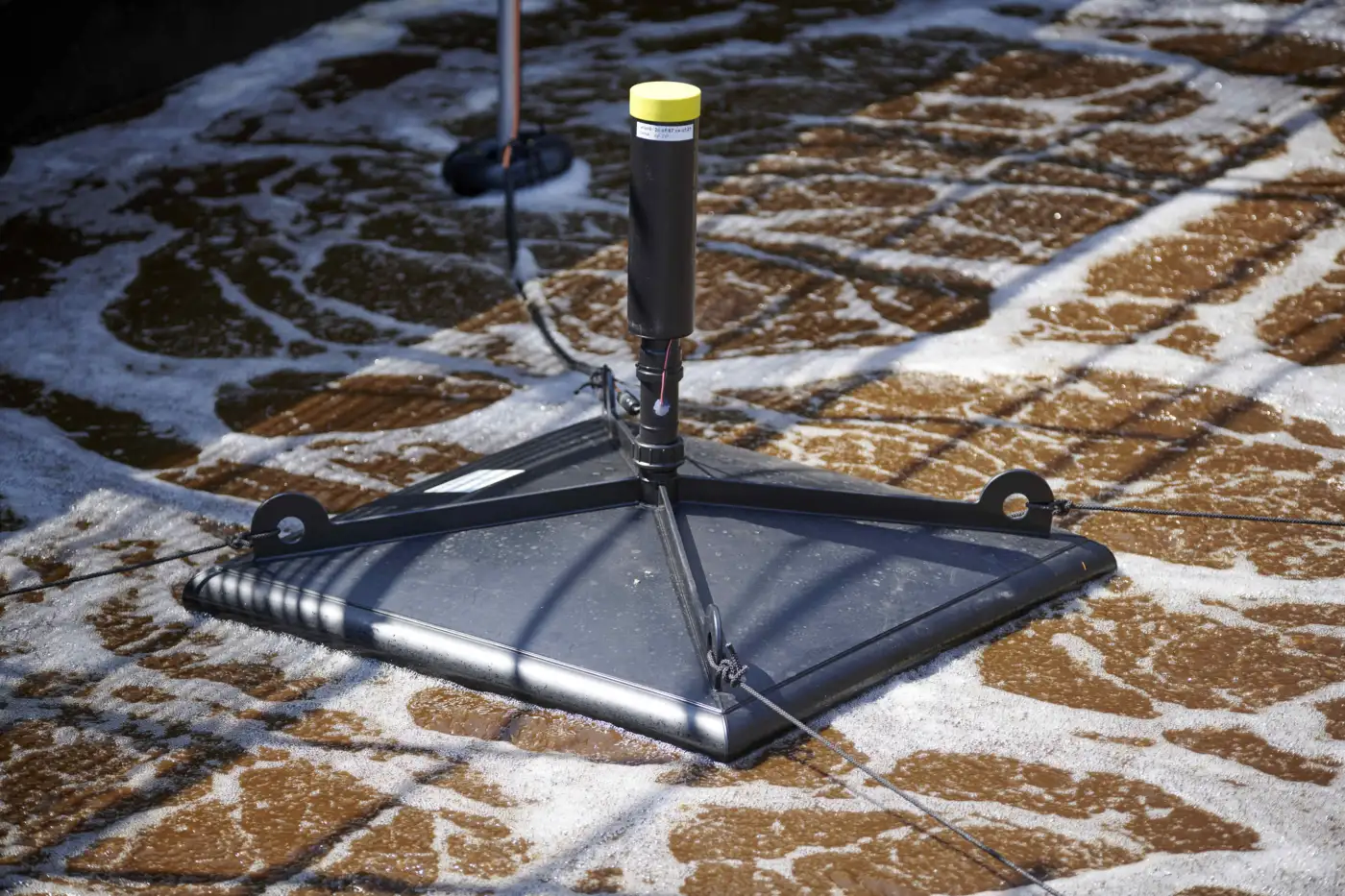
The implementation of dynamic control, off-gas measurement, and DNA analyses leads to a stabilization of nitrification. This results in fewer ammonium exceedances, lower power consumption, higher denitrification performance and less nitrous oxide. 
ara ebnat

Baseline Measurement

Over one month, the oxygen transfer of the biological treatment was measured for one line with old aeration membranes (6 years old). The measurements show that oxygen transfer decreases above 700 Nm³/h, and no additional oxygen can be transferred into the activated sludge.

First Measure for Power Savings

By limiting the maximum air flow, significant amounts of electricity can be saved. However, the behavior of the membrane shows that replacement is worthwhile and that there is great potential for efficiency gains.

Membrane Replacement

Replacing the membrane brings significant electricity savings (CHF 40,000 per year). In addition, the improved oxygen transfer offers the potential for better nitrification and more denitrification. Oxygen transfer measurements make it possible to determine the most cost-effective time for a replacement.

Optimizing Nitrification

In combination with dynamic control, DNA analyses and seasonal adjustment of the sludge age, nitrification could be stabilized. The number of ammonium exceedances in the plant's effluent could be reduced by 80%.

Side Effect: Nitrous Oxide Reduction

By stabilizing nitrification and using dynamic control, nitrous oxide emissions could also be reduced by approximately 50%. This demonstrates the benefit of a holistic, process-oriented optimization.

Baseline Measurement

Over one month, the oxygen transfer of the biological treatment was measured for one line with old aeration membranes (6 years old). The measurements show that oxygen transfer decreases above 700 Nm³/h, and no additional oxygen can be transferred into the activated sludge.

First Measure for Power Savings

By limiting the maximum air flow, significant amounts of electricity can be saved. However, the behavior of the membrane shows that replacement is worthwhile and that there is great potential for efficiency gains.

Membrane Replacement

Replacing the membrane brings significant electricity savings (CHF 40,000 per year). In addition, the improved oxygen transfer offers the potential for better nitrification and more denitrification. Oxygen transfer measurements make it possible to determine the most cost-effective time for a replacement.

Optimizing Nitrification

In combination with dynamic control, DNA analyses and seasonal adjustment of the sludge age, nitrification could be stabilized. The number of ammonium exceedances in the plant's effluent could be reduced by 80%.

Side Effect: Nitrous Oxide Reduction

By stabilizing nitrification and using dynamic control, nitrous oxide emissions could also be reduced by approximately 50%. This demonstrates the benefit of a holistic, process-oriented optimization.